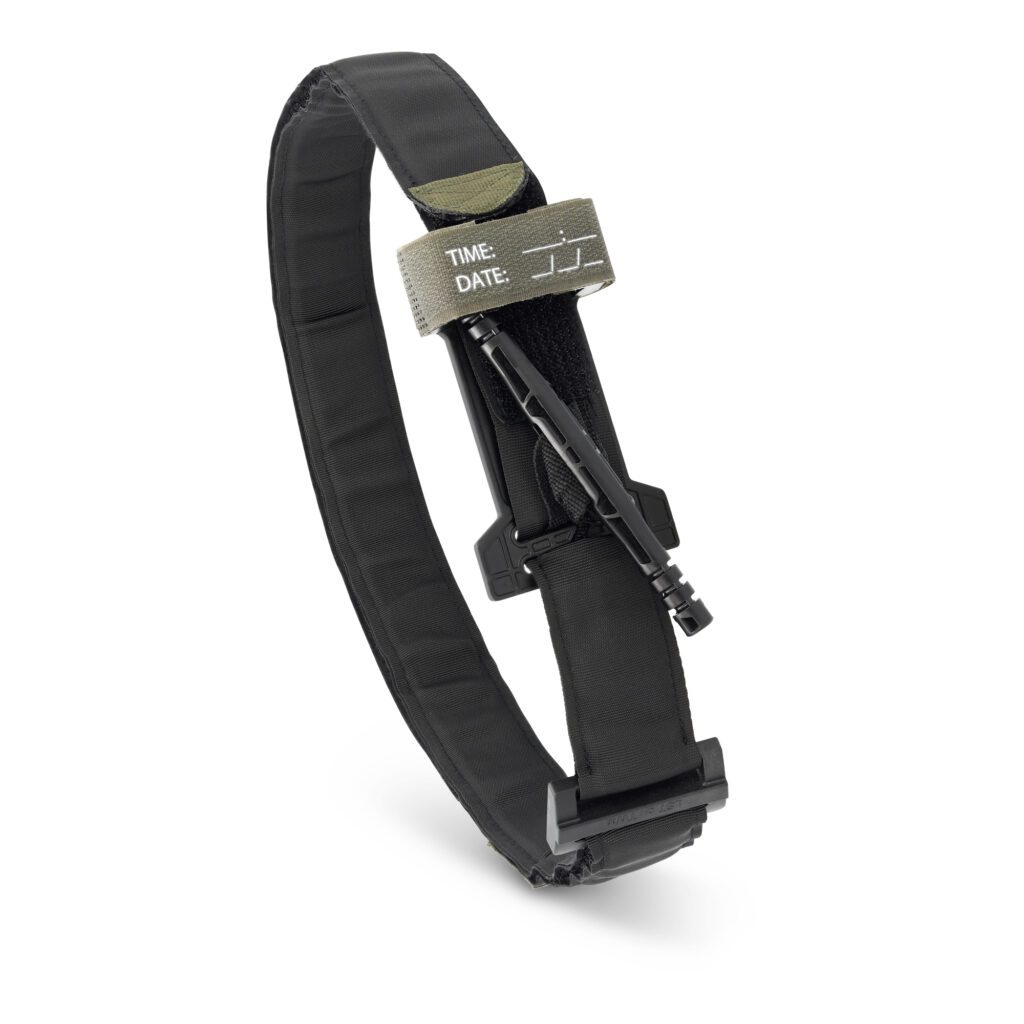
Home/Products/Life Saving Tourniquet

Your 60-Second Preparedness Assessment Is Complete

Your Score Is Only the Beginning.

0/ 100
Your Emergency Readiness Score
Readiness Level
 

Your answers provide a snapshot of your organization’s current hemorrhage-control preparedness.

But one score cannot answer the most important question:

If severe bleeding happened right now, would the appropriate capability actually be where the casualty needs it?

The short reading below will help you understand what preparedness really means, where hidden capability gaps can occur, and what your organization may need to evaluate next.

Stage 2 of 8National preparedness

A Nation Can Have Emergency Supplies—and Still Have a Capability Gap When It Matters Most.

A national agency may maintain strategic reserves. A province may hold emergency stock. A city or municipality may operate ambulances and rescue teams. A hospital may have trauma equipment ready for use.

But severe bleeding does not happen inside a preparedness plan.

It happens on a highway.Inside a factory.In a remote community.During a disaster.Inside a hospital.At a worksite.Or in an operational environment.

And when it happens, the capability that matters most is not the equipment listed on an inventory sheet.

It is the appropriate equipment already close enough to be reached and used by a trained responder.

Stage 2 of 8Preparedness gap

Inventory Is Not the Same as Capability

Inventory

Owning equipment creates inventory.

Capability

Positioning it correctly, training people to use it, standardizing deployment, inspecting it, replacing it and replenishing it create capability.

  • Positioning
  • Training
  • Standardized deployment
  • Inspection
  • Replacement
  • Replenishment
A device stored in a central warehouse may have strategic value—but it cannot immediately help a casualty several kilometers away.
A provincial stockpile may be complete—but the emergency may be happening in a remote municipality.
An ambulance may carry trauma equipment—but another question still remains:
Is the equipment available to the responder appropriate for the anatomical location of the bleeding?

That is why preparedness must extend beyond quantity.

It must reach the point of injury.

Stage 2 of 8Four-level preparedness model

From National Strategy to Point-of-Injury Access

Level1

National Strategic Reserve

Large-scale emergencies • Surge capacity • National contingency requirements

Level2

Regional & Provincial Prepositioning

Resources positioned closer to affected communities and response systems

Level3

Local Response Capability

Ambulances • Rescue teams • Hospitals • Health offices • Emergency operations

Level4

Point-of-Injury Access

Medic bags • Trauma kits • Rescue packs • Operational medical kits • Trained responders

Bar = relative distance from the casualty
Stage 2 of 8The objective is simple
First

The Casualty

Then

The Trained Responder

Then

The Appropriate Capability

The shorter that distance becomes, the more meaningful preparedness becomes.

Stage 3 of 8When severe bleeding begins

The Emergency Is Already Happening Where the Casualty Stands.

Severe bleeding is one of trauma care’s most time-critical emergencies.

Significant blood loss can rapidly compromise circulation and oxygen delivery to vital organs. In many emergencies, the first available responders may need to act before the casualty reaches definitive hospital care.

That is why hemorrhage-control readiness begins at the point of injury.

Not when the casualty reaches the hospital.
Not when more equipment arrives.
Not when someone reaches the central stockroom.

The response begins where the bleeding begins.

Stage 3 of 8Point-of-injury reality

The Trauma Timeline

Swipe to follow the timeline →
  1. Step 1Injury
  2. Step 2Bleeding Begins
  3. Step 3Immediate Recognition
  4. Point of injuryHemorrhage Control
  5. Step 5Transport
  6. Step 6Hospital Care
  7. Step 7Definitive Treatment
  8. Step 8Recovery

Early intervention helps preserve critical time until definitive medical treatment can be provided.

Stage 4 of 8But there is another question every readiness plan must answer

Where Is the Bleeding?

Not all traumatic bleeding presents the same anatomical challenge.

Simplified illustration for education only
Extremity hemorrhage

Arm or leg

Severe bleeding involving an arm or leg may be appropriate for a conventional limb tourniquet when tourniquet use is clinically indicated and consistent with training and protocol.

Difficult proximal / junctional hemorrhage

Groin or armpit

Severe bleeding may also occur higher, including difficult inguinal/groin and axillary regions.

These areas are close to the torso and can create a different hemorrhage-control challenge because conventional extremity-tourniquet placement may not address the same anatomy.

That means an organization can own tourniquets and still need to ask: Does our available capability match the bleeding scenario our responder may actually face?
Stage 4 of 8Anatomical capability gap

Two Gaps Can Exist

GAP 1

Access

Is the appropriate equipment close enough to the casualty?

GAP 2

Capability

Can the equipment available to the responder address the anatomical challenge they encounter?

The stronger preparedness question is therefore not simply:“Do we have tourniquets?”
It is:

“Will the appropriate hemorrhage-control capability be available where the emergency actually happens?”

Stage 5 of 8Before choosing a product, define the capability you need

What Should Modern Hemorrhage-Control Readiness Look Like?

A practical hemorrhage-control platform should help organizations strengthen several priorities at once.

Expand Capability

Give appropriately trained responders useful options across more than one relevant hemorrhage-control scenario.

Keep the Equipment Footprint Practical

Broader capability should not automatically mean carrying multiple bulky systems.

Support Point-of-Injury Availability

Equipment should be practical to position in the kits, vehicles and locations where responders are most likely to need it.

Fit Within Existing Trauma Systems

Technology should complement training, protocols, medical judgment, evacuation and definitive treatment—not replace them.

Stage 5 of 8So the question becomes

Can One Compact Platform Give Trained Responders Broader Capability Without Unnecessarily Increasing Equipment Complexity?

That Is the Design Problem Behind the Life Saving Tourniquet.

Introducing

Life SavingTourniquet

One Compact Platform. Two Documented Hemorrhage-Control Functions.
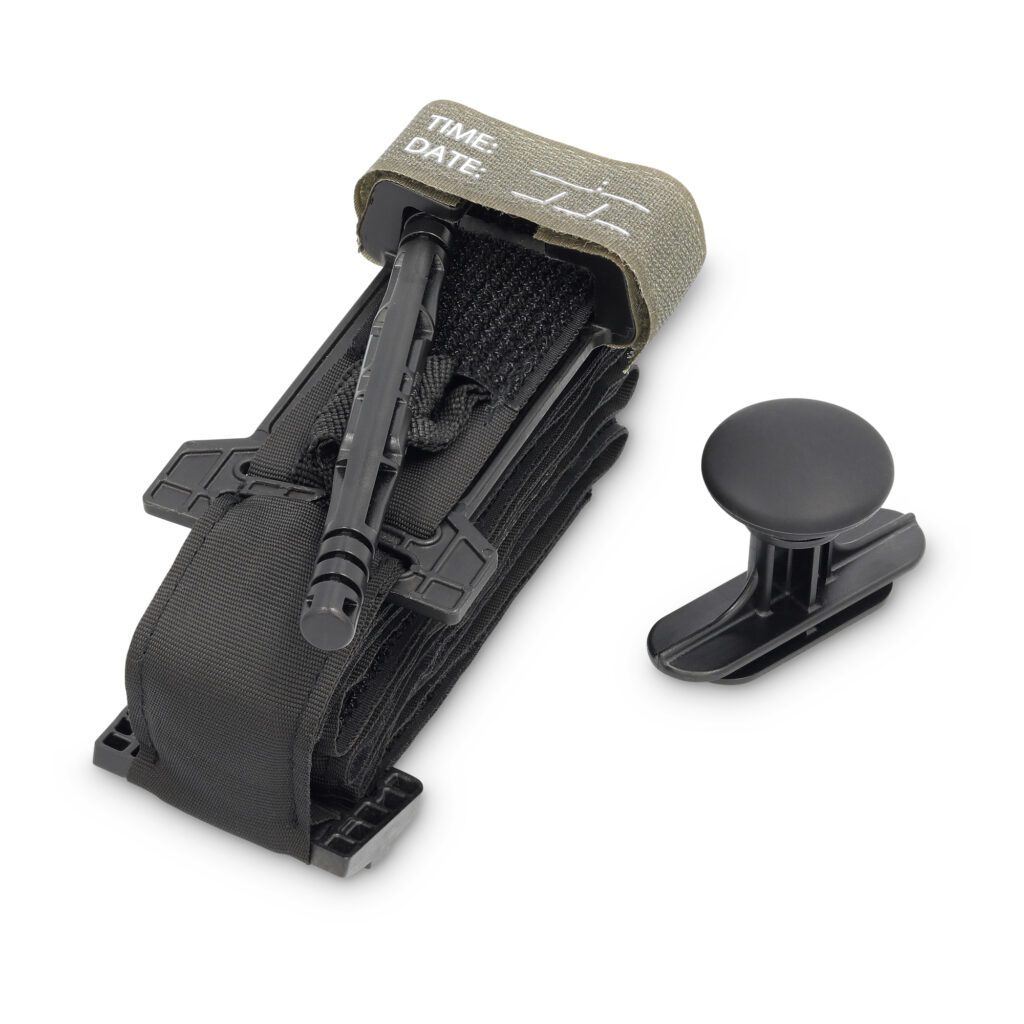
Weight≈ 130 g
Strap155 cm
FunctionsLimb + junctional
Life Saving Tourniquet with its detachable pressure pin
LST shown with the detachable pressure pin
Stage 6 of 8Introducing the Life Saving Tourniquet

The Life Saving Tourniquet (LST) is a compact hemorrhage-control platform developed by TWM — Tsadik Weiser Medical Ltd., Israel, with Medspecs Solutions Inc. serving as its Philippine authorized representative and distributor.

The LST combines:

MODE 1

A conventional windlass-based limb-tourniquet function

MODE 2

A detachable pressure-pin mechanism for localized compression in appropriate difficult inguinal and axillary applications.

One device architecture. Two functions.

Its purpose is not to claim that one device can manage every bleeding emergency.

Its value lies in something more specific:

Broader hemorrhage-control capability within one compact device architecture.

Stage 6 of 8Life Saving Tourniquet

Why the LST Matters

LST · Specification summary
Weight
Approximately 130 g
Strap
155 cm
Function 1
Windlass-based limb tourniquet
Function 2
Detachable pressure pin for selected junctional compression
Fits in
IFAKs • Ambulances • Trauma Bags • Tactical Medical Kits • Emergency Carts • Disaster-Response Caches • Industrial Response Stations
Developer
TWM — Tsadik Weiser Medical Ltd., Israel
PH distributor
Medspecs Solutions Inc.

One compact platform. Two distinct functions.

The LST can be configured for appropriate conventional limb applications and, when indicated and used by trained personnel, can also employ its detachable pressure pin for selected localized junctional compression applications.

For institutions, this creates an opportunity to evaluate broader capability without automatically adding a separate full-size system for every function.

Designed for real emergency environments.

The LST weighs approximately 130 grams and uses a 155 cm strap, supporting practical deployment in environments such as IFAKs, ambulances, trauma bags, tactical medical kits, emergency carts, disaster-response caches and industrial response stations.

Its compact format is designed around a simple preparedness reality: critical equipment can only help if it is available when the responder needs it.

Engineered for controlled application and retention.

The LST incorporates a windlass mechanism for controlled tightening and a retention system designed to help maintain applied tension when used according to training and the manufacturer’s Instructions for Use.

Its detachable pressure pin adds a separate localized compression mechanism for selected difficult proximal applications.

Stage 6 of 8See the two functions

See the Two Functions

LST in limb configuration

Conventional Limb Hemorrhage Control

A windlass-based configuration for appropriate extremity application.

The windlass allows controlled mechanical tightening, while the retention system helps secure the applied configuration during movement and transport.
U.S. regulatory documentationLimb Function — Class I Non-Pneumatic Tourniquet
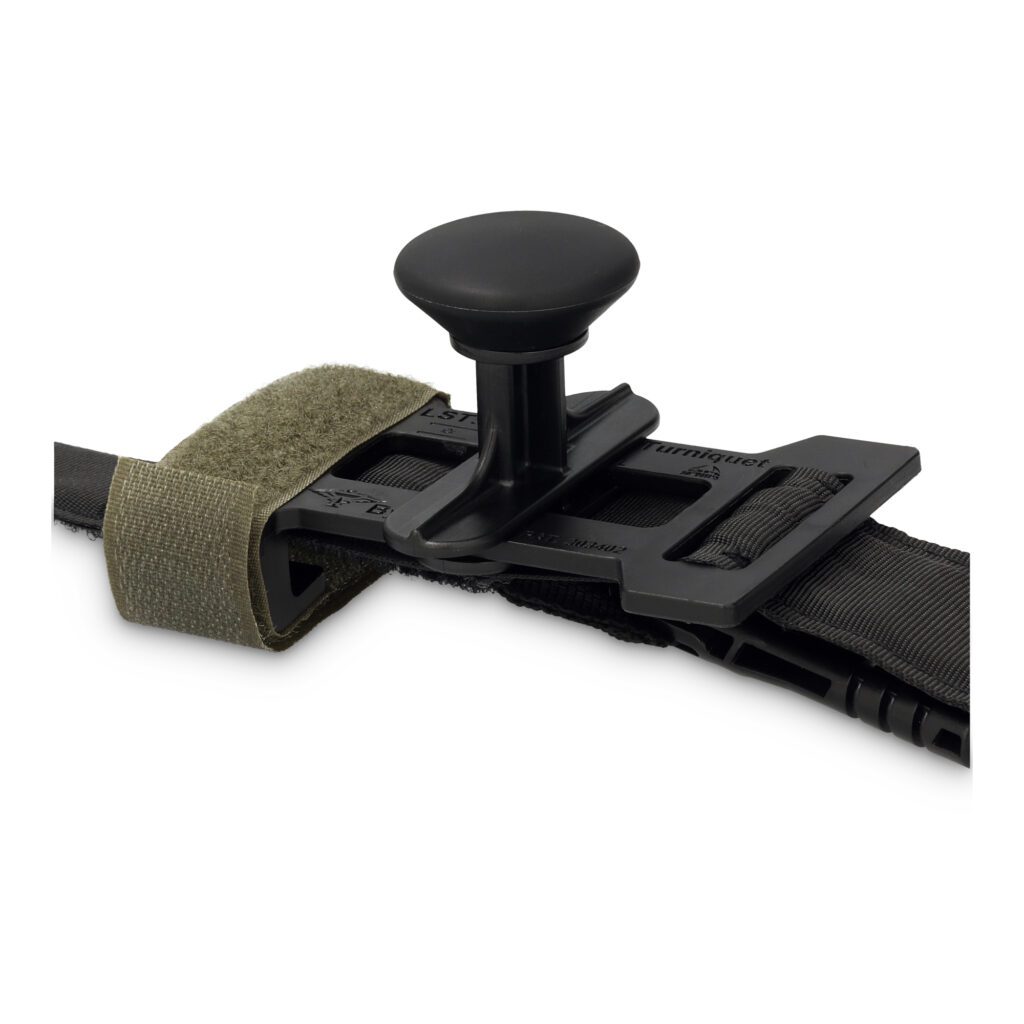
LST with pressure pin mounted

Selected Junctional Hemorrhage Control

The detachable pressure pin is designed to provide localized mechanical compression for appropriate difficult inguinal and axillary applications.

Use requires appropriate training, clinical judgment, relevant organizational protocols and adherence to the current manufacturer Instructions for Use.
U.S. regulatory documentationJunctional Function — FDA 510(k) K254060, Class II Vascular Clamp
Training video · TW Medical

LST Step-by-Step Training for Extremity and Junctional Hemorrhage

For familiarization only. It does not replace formal training, medical direction or the manufacturer’s current Instructions for Use.
Stage 6 of 8Purpose-driven engineering

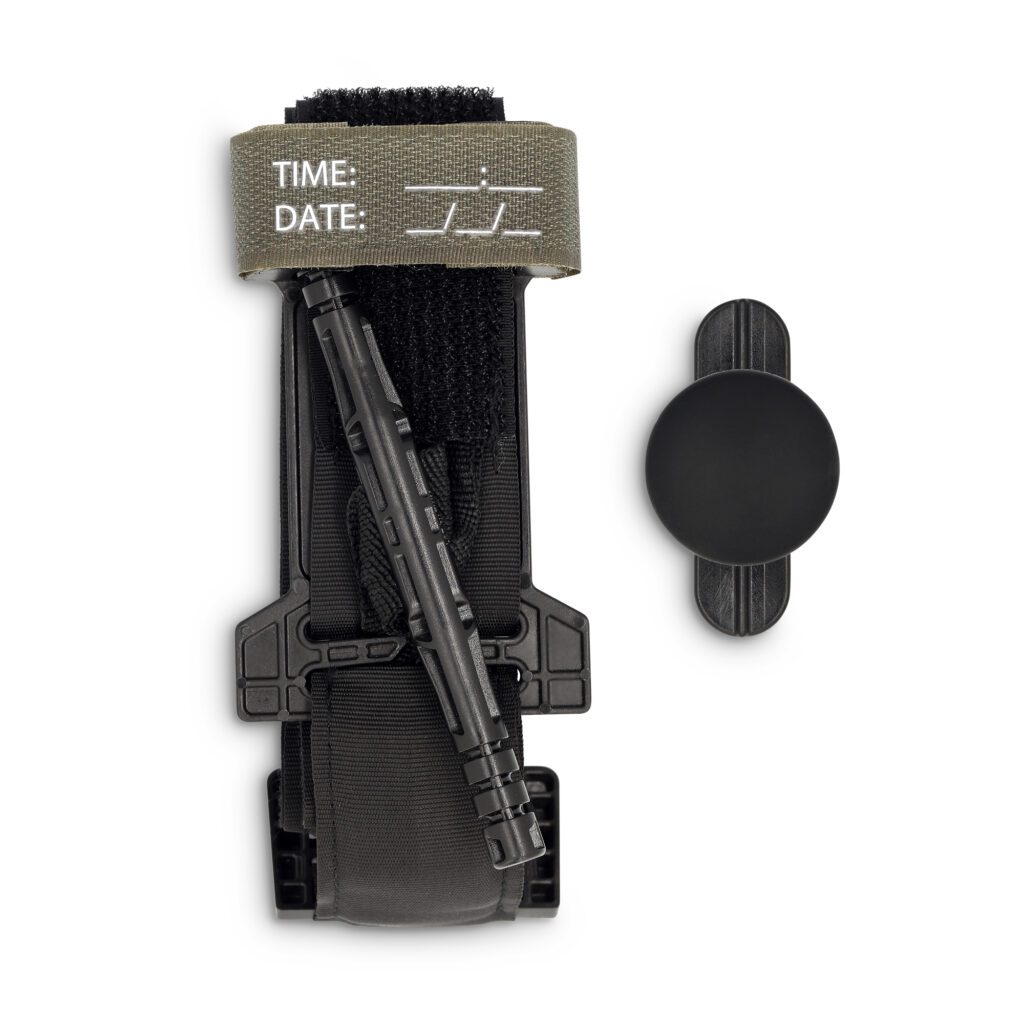
Every Major Component Has a Defined Role.

Life Saving Tourniquet laid flat with the pressure pin beside it
  • 1
    High-Strength StrapDesigned to support reliable tension during appropriate application.
  • 2
    Windlass MechanismAllows progressive mechanical tightening.
  • 3
    Secure Retention SystemDesigned to help maintain the applied configuration.
  • 4
    Detachable Pressure PinProvides the device’s distinctive localized compression mechanism for selected applications.
  • 5
    Compact ConstructionSupports storage and deployment across multiple emergency-response environments.
Stage 7 of 8Technical & clinical evidence

Medical-Device Credibility Should Come From Documentation—Not Hype.

Before an institution adopts new trauma technology, decision-makers should be able to ask:

What is the intended function?
What regulatory documentation exists?
What clinical and technical evidence is available?
What are the limitations?
What training is required?
How does the technology fit our existing protocols?

The Life Saving Tourniquet is supported by a regulatory, technical and clinical evidence dossier developed for professional and institutional evaluation.

Stage 7 of 8Proof wall

The Proof Wall

Philippine regulatory authorizationPH

Philippine FDA CMDN

CDRRHR-CMDN-2026-2201221

Issued
16 July 2026
Valid through
16 July 2031
Learn more

Valid through 16 July 2031, subject to certificate conditions.

U.S. regulatory documentationLimb

Limb Function

Class I Non-Pneumatic Tourniquet

Learn more

These are separate regulatory pathways corresponding to the LST’s distinct documented functions.

U.S. regulatory documentationJunctional

Junctional Function

FDA 510(k) K254060

Class
Class II Vascular Clamp
Learn more

These are separate regulatory pathways corresponding to the LST’s distinct documented functions.

These are separate regulatory pathways corresponding to the LST’s distinct documented functions.
Quality-system supportISO

ISO 13485:2016

Valid through
17 July 2029

The technical dossier includes updated ISO 13485:2016 quality-system certification documented as valid through 17 July 2029, subject to continued certification requirements.

Peer-reviewed feasibility evidenceClinical

What Does the Available Clinical Evidence Show?

In a peer-reviewed healthy-volunteer feasibility study, complete arterial occlusion was reported in:

96.8%31 of 32 supraclavicular applications
96.7%30 of 31 femoral applications

These findings support the feasibility of short-duration arterial occlusion under controlled study conditions. They should not be interpreted as proof of mortality reduction, guaranteed effectiveness in every trauma patient, or evidence that the LST is appropriate for every hemorrhage scenario.

For clinical / technical review

Assessment included palpation, pulse oximetry and Doppler criteria.

Open the feasibility study (PDF)

Engineering verificationBench

Designed to Maintain Applied Pressure

Units tested
8
Protocol
4 hours

The technical dossier includes manufacturer pressure-retention testing involving eight units over a four-hour protocol.

All eight units were reported to remain above the predefined acceptance threshold throughout the test period.

This is engineering bench verification and should not be interpreted as a clinical outcome study.

Clinical & technical dossierDossier

Review the Evidence

Provide your medical, clinical, technical or procurement team with the available regulatory, clinical and technical documentation.

Request a Quote
Stage 7 of 8Evidence and limitations

Evidence Where Evidence Exists.
Limitations Where Limitations Exist.

Responsible medical-device evaluation requires both.

The Life Saving Tourniquet is not presented as a device for every severe bleeding injury.

Appropriate use depends on

  • Anatomical location
  • Clinical circumstances
  • Responder training
  • Organizational protocols
  • Medical direction
  • The manufacturer’s current Instructions for Use

The LST does not replace

  • Emergency medical assessment
  • Monitoring and reassessment
  • Evacuation
  • Resuscitation
  • Surgery where indicated
  • Definitive medical treatment
  • Professional clinical judgment

It is one component within a broader trauma-response system.

Stage 8 of 8The goal is not to replace what already works

The Goal Is to Identify Whether a Meaningful Capability Gap Exists.

Your organization may already have an established hemorrhage-control program.

That does not automatically mean your current equipment should be replaced.

Instead, evaluate your system around the questions that matter:

Tick what your current system already answers well — 0 of 6

If your existing system already answers those questions well, that is valuable.

If it does not—

That Is Where Evaluation Should Begin.

Stage 8 of 8Do not begin with “How many should we buy?”

Begin With “What Capability Do We Actually Need?”

A responsible institutional pathway starts with evaluation.

01

Preparedness Assessment

Review existing equipment, deployment, training, stockpile, operational risks and potential capability gaps.

02

Technical & Clinical Review

Examine intended functions, product specifications, regulatory documentation, clinical evidence, risk-benefit information, Instructions for Use and relevant limitations.

03

Product Demonstration

Allow appropriate stakeholders to examine the device architecture, windlass mechanism, pressure-pin configuration and intended application principles.

04

Pilot or Controlled Evaluation

Where permitted by institutional policy, consider simulation, technical familiarization, selected-department review or another appropriate controlled evaluation.

05

Deployment Planning

Determine where capability should be positioned based on actual risk. This may include:

Strategic reserve • Provincial or regional positioning • LGU inventory • Hospitals • Ambulances • Rescue vehicles • Operational medical kits • Responder-level access
06

Training & Implementation

Determine authorized users, familiarization requirements, competency reinforcement, inspection, replacement, replenishment and protocol integration.

07

ProcurementLast step

Only after sufficient evaluation should quantity, pricing, delivery, training requirements and commercial terms be determined.

Stage 8 of 8Institutional evaluation

Choose Your Next Step

Review Your Current Readiness

Understand existing inventory, deployment, training, operational risk and possible capability gaps.

Review the Evidence

Provide your medical, clinical, technical or procurement team with the available regulatory, clinical and technical documentation.

See the Technology

Allow appropriate stakeholders to examine the device and its intended application principles.

Discuss a Controlled Evaluation

Where institutional policy allows, explore a limited technical, simulation or operational evaluation before broader deployment.

Discuss Deployment & Procurement

For organizations that have completed sufficient evaluation and are ready to discuss deployment, quantity, supply and commercial requirements.

Stage 8 of 8One final question

If severe hemorrhage occurred within your area of responsibility today:

Where is the nearest appropriate hemorrhage-control device?
Who has access to it?
Is that person trained?
Can the capability reach the casualty immediately?
And what happens if the bleeding occurs where a conventional limb tourniquet cannot appropriately address the anatomical challenge?

If those answers are already clear, your organization has something important to build upon.

If they are not—

That Is Where the Conversation Should Begin.

Life Saving Tourniquet

From National Preparedness to Point-of-Injury Capability.

One Compact Platform. Two Distinct Hemorrhage-Control Functions.

Evidence-Led. Professionally Evaluated. Deployed Where Justified.

Professional-use notice

The Life Saving Tourniquet is intended for use by appropriately trained personnel according to the manufacturer’s current Instructions for Use, applicable clinical guidance, organizational protocols, medical direction and regulatory authorization.

No single hemorrhage-control device is appropriate for every trauma scenario. Hemorrhage-control devices do not replace emergency medical assessment, monitoring, reassessment, evacuation, resuscitation, surgery where indicated, definitive treatment or professional clinical judgment.

Stage 1 of 8Assessment result
Request a Quote

Request a Quote

Schedule a Technical Demonstration

Product Inquiry

Quote for: Life Saving Tourniquet